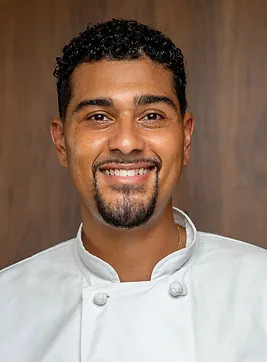
By Chef Eric McCree, Chef & Owner, Filé Gumbo Bar
In New Orleans, music and food were never separate things. The same streets that gave the world jazz gave it gumbo, red beans and rice, and the long, loud Sunday brunch. When jazz traveled north to New York a century ago, it carried that table with it. That’s why, every Saturday and Sunday at Filé Gumbo Bar in Tribeca, we don’t just play jazz in the background. The band is part of the meal.
Before I ever stirred a roux, I spent my career as a touring audio engineer. I lived inside live music. When the pandemic shut down live entertainment, I turned to the other thing that had always moved me: the food of Louisiana. A road trip through Lafayette and the memory of my grandfather, Aubrey “Tiny” Gaines, set me on the path to opening Filé. So when people ask why jazz brunch matters so much to us, the honest answer is that I can’t imagine Louisiana food without the music.
I talked about exactly that with CBS News. Watch my interview with CBS News on “The Dish”, where we get into how New Orleans flavors came to New York and why live jazz is what brings our weekend jazz brunch to life.
Here’s the bigger story behind it.
Where jazz was born: New Orleans in the late 1800s
Jazz grew out of New Orleans because no other American city mixed so many cultures so closely. African, Caribbean, French, Spanish, Creole, Italian and Anglo-American traditions all lived side by side in the port city.
The roots run back to Congo Square. In the 1700s and 1800s, enslaved and free people of African descent gathered there on Sundays to drum, sing and dance. Those rhythms survived when they were suppressed almost everywhere else in the country. They became part of the city’s musical DNA.
By the late 1800s, New Orleans had brass bands on every corner. They played parades, picnics, dances and funerals. Musicians blended ragtime, blues, spirituals, marches and Caribbean rhythms. Cornetist Buddy Bolden is often credited as one of the first to play the looser, louder, improvised sound that became jazz around 1900.
The tradition of the second line grew up alongside it: the crowd that follows the brass band down the street, dancing and waving handkerchiefs. Jazz in New Orleans was never concert music. It was community music, played where people lived, celebrated, mourned and ate.
Why jazz left New Orleans
Jazz didn’t stay home for long. Several forces pushed it up the Mississippi and out across the country.
- The closing of Storyville in 1917. The city’s red-light district employed many musicians. When the Navy forced it to close, a lot of those players needed work elsewhere.
- The Great Migration. Beginning in the 1910s, millions of Black Southerners moved north to escape Jim Crow and find jobs. Musicians traveled with them, and so did their cooking.
- Riverboats and railroads. Excursion steamboats carried New Orleans bands up the river. Trains carried them to Chicago and on to New York.
- Records and radio. Once jazz could be recorded and broadcast, it no longer depended on where a musician happened to live.
Chicago became jazz’s first big stop in the north. Louis Armstrong left New Orleans in 1922 to join his mentor King Oliver’s band there. But New York was where the music business lived, and jazz was headed there next.
How New Orleans jazz took over New York
New York actually heard jazz on record before most of the country heard it live. In 1917, the Original Dixieland Jass Band, a group of New Orleans musicians, made what’s widely considered the first jazz recording in New York. It was a hit, and the city was hooked.
In 1924, Louis Armstrong came to New York to play with Fletcher Henderson’s orchestra at the Roseland Ballroom. His phrasing and swing changed how the city’s musicians played. Other New Orleans greats made the trip too, including Jelly Roll Morton and Sidney Bechet.
The 1920s brought the Harlem Renaissance, and jazz became its soundtrack. Clubs like the Cotton Club and the Savoy Ballroom made Harlem the center of the jazz world. Duke Ellington’s orchestra built its reputation uptown. The big band and swing eras grew directly out of the New Orleans foundation.
New York kept pushing the music forward. In the 1940s, musicians at Minton’s Playhouse in Harlem and the clubs on 52nd Street created bebop: faster, more complex and more experimental. Later, Greenwich Village clubs became home to generations of modern jazz.
Armstrong himself made New York home. He lived in Corona, Queens, from the 1940s until the end of his life, and his house is now a museum. A New Orleans kid became a New Yorker, but he never lost the taste of home.
Jazz and Louisiana food: the same recipe
Here’s what I think about every time I stand at our gumbo kettle: jazz and Louisiana food were built the same way.
Gumbo is a dish made from everything the region had to offer. West African cooks brought okra, a word that traces back to West African languages. French cooks brought the roux. Choctaw cooks gave us filé powder, ground sassafras leaf, the ingredient our restaurant is named after. Spanish, Caribbean, German and Italian influences all found their way into the pot.
Jazz did the exact same thing. It took African rhythms, European harmony, church music, blues and brass marches, and turned them into something new. Both gumbo and jazz depend on a strong foundation and then leave room for improvisation. Every cook’s gumbo is a little different. Every band plays the same standard a little differently.
The connection goes deeper than metaphor:
- Red beans and rice on Mondays. It was the New Orleans wash-day meal, simmering all day while laundry got done. Louis Armstrong loved it so much he famously signed his letters “Red beans and ricely yours.
- Food at every gig. Jazz in New Orleans was played at parties, picnics, social club events and family gatherings. Wherever the band played, there was food.
- The jazz funeral and the repast. After the somber walk to the cemetery, the band turns joyful on the way back. Then everyone eats.
- Restaurants as music rooms. New Orleans restaurants and music halls have always overlapped. You eat, then you dance, then you eat again.
When jazz musicians and Southern families moved north during the Great Migration, they carried both traditions. Harlem’s music scene and its Southern kitchens grew up together. Soul food, Creole cooking and jazz shared the same neighborhoods.
The New Orleans jazz brunch tradition
Brunch in New Orleans has deep roots. In the 1800s, Madame Bégué’s restaurant in the French Quarter served a hearty late-morning “second breakfast” to workers from the nearby French Market. Over the following century, the city’s grand restaurants turned the long weekend meal into an institution.
The jazz brunch as we know it is widely credited to the Brennan family at Commander’s Palace, who popularized pairing a lazy weekend brunch with a strolling live jazz band. It caught on fast. Today a jazz brunch is one of the most New Orleans things you can do: grits, eggs, gumbo, cocktails, and a trio working its way around the dining room.
That’s the experience we wanted to bring to New York.
Filé’s weekend jazz brunch in Tribeca
When we opened Filé Gumbo Bar at 275 Church Street in 2022, jazz brunch was never optional. I spent years making sure live music sounded right in front of an audience. At Filé, the room is the stage.
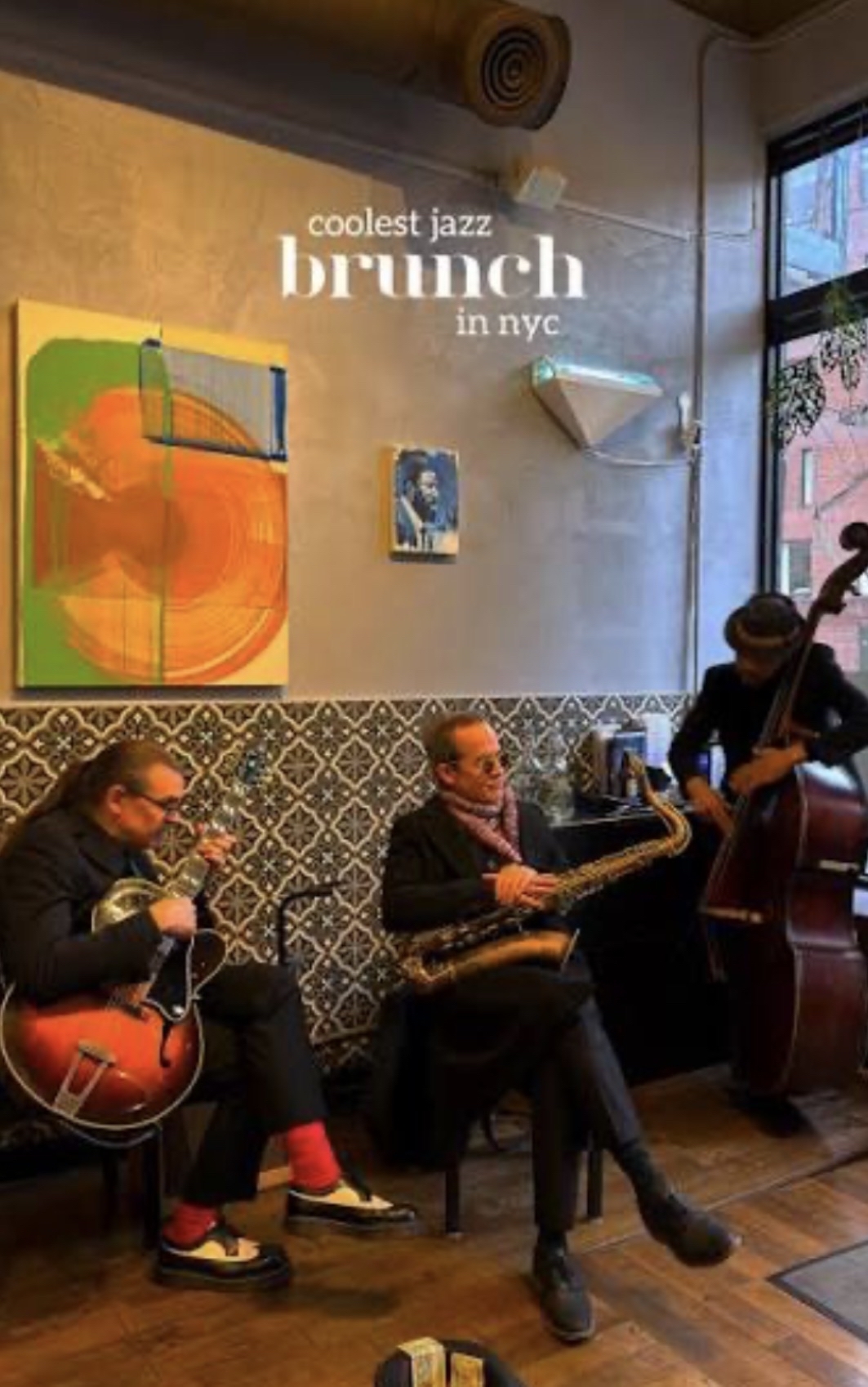
Every Saturday and Sunday, the Gumbo Jazz Trio plays throughout the dining room. Guests get up and dance with the band, the way they would on Frenchmen Street. Brunch includes a bottomless cocktail option for 90 minutes, so the table can settle in and let the music carry the afternoon.
The food is pure Louisiana:
- Gumbo from our steam kettle, simmered right at the bar on a deep, dark roux. Start with a lil’ bowl if you’re new to gumbo.
- Shrimp and grits and other Southern brunch classics.
- Char-grilled oysters, smoky and buttery.
- Leidenheimer bread, shipped in from New Orleans for our po’boys.
Eater NY has named Filé home to some of the city’s best gumbo and one of New York’s essential restaurants. But the review I love most is the one guests give the band: they stay through another set, order one more round, and leave humming.
That’s the point. In my CBS News interview, we talked about how the music is what makes our brunch feel like New Orleans. The food brings you in. The jazz makes you stay
Keeping the tradition alive in New York
Jazz came to New York from New Orleans more than a hundred years ago, and it never really left either city. It changed, grew and found new voices in Harlem, on 52nd Street and in the Village. But at its heart, it’s still the music of people gathering around a table.
Louisiana food is the same. It travels well because it’s built on generosity: big pots, shared plates, and room for one more chair.
At Filé, we’re proud to keep both traditions together in Tribeca. Come hungry, bring friends, and get ready to dance.
Reserve your table for jazz brunch.
Saturdays and Sundays at 275 Church Street, New York, NY 10013.
Frequently asked questions
What is a New Orleans jazz brunch?
A New Orleans jazz brunch is a long weekend meal served with live jazz, usually a small band that strolls or plays through the dining room. It pairs Louisiana brunch dishes like gumbo, shrimp and grits and grillades with cocktails and music. The Brennan family at Commander’s Palace is widely credited with popularizing it.
How did jazz get from New Orleans to New York?
Jazz moved north in the 1910s and 1920s with the Great Migration, the closing of Storyville in 1917, riverboats, railroads and the rise of records and radio. New Orleans musicians like Louis Armstrong, Jelly Roll Morton and Sidney Bechet brought the sound to New York, where it shaped the Harlem Renaissance, swing and bebop.
Why is jazz so connected to Louisiana food?
Both grew out of the same mix of African, Caribbean, French, Spanish and Native American cultures in New Orleans. Jazz was played at parties, parades, funerals and family gatherings where food was always central. Like gumbo, jazz starts from a strong foundation and leaves room for improvisation.
Where can I find a jazz brunch in Tribeca?
Filé Gumbo Bar at 275 Church Street in Tribeca hosts a live jazz brunch every Saturday and Sunday. The Gumbo Jazz Trio plays throughout the dining room, and the menu features gumbo, shrimp and grits, char-grilled oysters and New Orleans brunch cocktails.
Does Filé Gumbo Bar offer bottomless brunch?
Yes. Filé’s weekend jazz brunch includes a 90-minute bottomless cocktail option. Reservations are available on OpenTable.
Where can I watch Chef Eric McCree’s CBS News interview?
Chef Eric McCree was featured on CBS News’ “The Dish,” talking about bringing New Orleans flavors to New York at Filé Gumbo Bar. Watch the CBS News segment here.
What is filé powder?
Filé (pronounced fee-lay) is ground, dried sassafras leaf, introduced to Louisiana cooking by the Choctaw. It thickens and flavors gumbo, and it’s the ingredient our restaurant is named after.