
Oct 11, 2026
Two holidays, one pot
This Monday, October 12, is National Gumbo Day. It is also Indigenous Peoples’ Day. When I noticed the two landing on the same date this year, I had to stop and laugh, because for a restaurant called Filé, that is not a coincidence you get to ignore.
Most calendar overlaps are trivia. This one feels more like a nudge. It asks us to say out loud something we believe every day we light the kettle at 275 Church Street: you cannot tell the story of gumbo honestly without telling the story of the people who were in Louisiana first.
National Gumbo Day is, for us, basically a birthday party. It is the one day the rest of the country agrees with what we already think, which is that a bowl of dark-roux gumbo is one of the great dishes on earth. We like celebrating it. We like the excuse to talk about roux color, about andouille, about whether potato salad belongs in the bowl (it can, and we will not fight you about it).
Indigenous Peoples’ Day asks for something different. It is a day to recognize the Native nations whose land, knowledge and survival shaped this continent, and to look honestly at the history that tried to erase them. It is not a party. It is a day for paying attention.
So this year we want to hold both at once. We want to celebrate gumbo, and we want to credit one of its oldest ingredients to the people who gave it to us. That ingredient happens to be the word on our front door.
What filé actually is
Filé (say it “fee-lay”) is dried, ground sassafras leaf. That is the whole ingredient. No blend, no secret mix. You pick the young leaves of the sassafras tree, dry them, and grind them into a fine, olive-green powder that smells a little like eucalyptus, a little like root beer, and a little like a walk in the woods after rain.
The sassafras tree is native to eastern North America, and long before there was a Louisiana, a New Orleans or a single French or Spanish ship on the Gulf, the Choctaw people knew exactly what to do with it. Choctaw cooks dried and pounded sassafras leaves and used the powder to season and thicken soups and stews. They also used the tree’s roots and bark in medicine. This was knowledge built over generations of living with the land of the Gulf South.
When French colonists, enslaved Africans and Acadian exiles arrived in that same region, they learned from the people already there. Filé entered the Creole and Cajun kitchen through Native hands. Into the 1800s, Choctaw women were still bringing filé to sell at the French Market in New Orleans, and for many cooks in the city, that is where you bought it.
The name itself tells you how it behaves. Cooks used the French word filé, from filer, “to spin into threads,” because the powder turns stringy if it boils. That is why the rule in most Louisiana kitchens is simple: filé goes in at the end, off the heat, or right at the table. A pinch over a hot bowl and it blooms, thickening the broth slightly and adding that earthy, herbal finish nothing else quite replaces.
There is even a long-running theory that the word “gumbo” itself owes something to the Choctaw word for sassafras, kombo. Most food historians lean toward a West African root instead, from words for okra. I find it fitting that nobody can fully settle the argument. A dish this layered probably deserves a name with more than one parent.
Every spoonful is a family tree
People sometimes call gumbo a melting pot. I get why, but I think that undersells it. In a melting pot, everything disappears into everything else. In a good gumbo, you can still taste where each piece came from.
The okra came across the Atlantic with West Africans, enslaved and brought to Louisiana against their will, who carried their foodways with them and became the backbone of the region’s cooking. The roux, flour browned slowly in fat until it is the color of dark chocolate, comes out of French technique. The Spanish colonial years left their mark too, especially in the Creole kitchens of New Orleans. Cajun cooks, descendants of Acadians forced out of Canada, built their own version out in the bayous and prairies, often heavier on the roux and the game.
And underneath all of it, both literally and historically, is the land those people arrived on, and the Native nations who were already living there. The Choctaw, Chitimacha, Houma, Coushatta, Tunica-Biloxi and others knew those waters, those woods and those plants intimately. Filé is the clearest Indigenous fingerprint in the pot, but it is not the only one. Corn, the local seafood and game, and a whole body of knowledge about what grows where and what it is good for all came from people who had been reading that landscape for thousands of years.
Gumbo, in other words, is not one culture’s dish that others borrowed. It is what happened when several peoples ended up in the same place, much of it through violence, displacement and survival, and somehow made something beautiful out of what they had. That history is not all comfortable. Being honest about it is part of respecting the food.
When I tell first-timers at the bar that gumbo is the story of Louisiana in a bowl, this is what I mean. Not a postcard. A real story, with real people in it, some of whom have not always been given credit.
Why we named it Filé
When my wife Erin and I first sketched out this restaurant, it had a different name: Tiny’s Gumbo Bar. It was meant as an ode to my grandfather, Aubrey Gaines, “Tiny” to everyone who loved him. He is the reason I fell in love with this food, and his cooking shaped every instinct I bring to the kettle.
But while we were still planning, before we ever opened the doors, we realized the name needed to say something bigger than one family. So we changed it to Filé, because it is the smallest thing in the bowl that says the most. It is a single ingredient, a pinch of green powder, and it carries the oldest part of the story. If you understand filé, you understand that gumbo did not start with any one group. It started with the land and the people who knew it.
Tiny didn’t hand me a recipe card. What he gave me was inspiration: a sense of how a gumbo should taste, how much patience a roux deserves, and how a pot on the stove pulls people to the table. The recipes we cook at Filé are our own, but his spirit runs through every one of them. He taught me that cooking is an inheritance, and that you owe something to the people who shaped you: to cook with care, and to remember where it came from.
Filé is that same idea on a bigger scale. Tiny inspired the way I cook. Long before that, Choctaw cooks gave Louisiana filé. Neither of those gifts should go unacknowledged, and the name on our door lets us honor both.
I did not grow up thinking I would own a restaurant. I spent years as a touring audio engineer, and when the pandemic shut down live entertainment, I found myself on a road trip through Lafayette that changed my direction. Down there, the thing that struck me most was how seriously people take where their food comes from. Not in a museum way. In a living way. Grandmothers argue about roux color. Cousins argue about okra. Everybody has a family version and everybody knows whose it was.
That is the spirit we wanted to bring to Tribeca. Our mission at Filé is to serve the best gumbo in New York and to be a gateway into Louisiana’s food and culture, whether this is your first lil’ cup or your hundredth bowl. Being a real gateway means telling the whole story, not just the parts that look good on a menu. The name on our door is our way of keeping ourselves honest about that.
How we’ll mark Monday, and every day after
We want to be careful here. A restaurant should not turn Indigenous Peoples’ Day into a marketing hook, and we are not going to try. What we can do is use the attention National Gumbo Day brings us to point toward the people who deserve the credit.
Here is what that looks like for us:
- We’ll tell the filé story at the bar. If you sit at the kettle on Monday, ask about it. Our team will walk you through what filé is, where it comes from, and how to use it. Try a pinch over your bowl and taste the difference.
- We’ll keep crediting it on our menu and our site. Filé’s Choctaw roots are part of how we describe our gumbo, and that does not change after Monday.
- We’ll point you to the source. The Choctaw people are not a chapter in a history book. They are living nations today, including the Choctaw Nation of Oklahoma, the Mississippi Band of Choctaw Indians and the Jena Band of Choctaw Indians in Louisiana. If this story means something to you, take a few minutes to learn about them from their own websites, cultural centers and artists, and support Native-owned businesses and organizations when you can.
We would also ask something small of everyone who loves gumbo as much as we do. The next time you sprinkle filé over a bowl, anywhere, think for a second about where it came from. Say the name. That is how food history stays honest: one cook, one bowl, one conversation at a time.
Come pull up a stool
National Gumbo Day and Indigenous Peoples’ Day landing on the same Monday is an accident of the calendar. But the connection between them is no accident at all. It is sitting in every bowl we serve, and it is written over our door.
So whether you stop in Monday or later this fall, come see us at 275 Church Street. Grab a lil’ cup if you are new to gumbo, or a full bowl if you already know. Watch the kettle simmer at the bar. Tear off some Leidenheimer bread. And when the bowl lands in front of you, take a pinch of filé and remember that before this dish was Cajun or Creole, before it was ours or yours, part of it was Choctaw.
Happy National Gumbo Day. And to the Native nations of Louisiana and beyond: thank you.
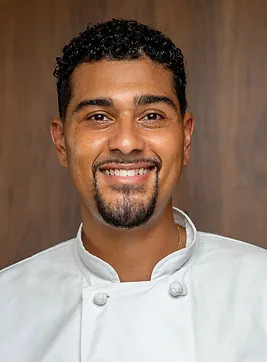
— Chef Eric McCree, Filé Gumbo Bar