Louisiana cooking doesn’t get its character from one spice, one pepper, or one secret blend. It comes from layers.
A dark roux. Onion, celery, and bell pepper. Garlic. Thyme and bay leaf. Paprika, cayenne, and black and white pepper. Green onion and parsley at the very end. And in gumbo, the earthy finish of filé.
Filé Gumbo Bar started with a road trip through Lafayette. What stayed with me wasn’t how hot the food was. It was how patient it was: cooks who knew where every ingredient came from and exactly when it belonged in the pot. That’s the approach we’ve built on in Tribeca.
So when someone asks what spices go into Cajun and Creole cooking, the honest answer is bigger than the label on a seasoning jar. Heat matters, but it’s one part of the picture. What you’re after is depth, aroma, and the kind of flavor that sends you back for another spoonful. Here’s what builds it.
Cajun vs. Creole: Why There’s No Single “Cajun Spice
Cajun and Creole cooking are close cousins raised in different houses. Cajun cooking came out of the Acadian communities of rural South Louisiana. It’s bold and rustic, built on pork fat, dark roux, and whatever the land and bayou provided.
Creole cooking grew up in New Orleans, a port city with a wider pantry. It pulled from French, Spanish, African, and Caribbean kitchens, which is one reason Creole dishes reach for tomatoes more often.
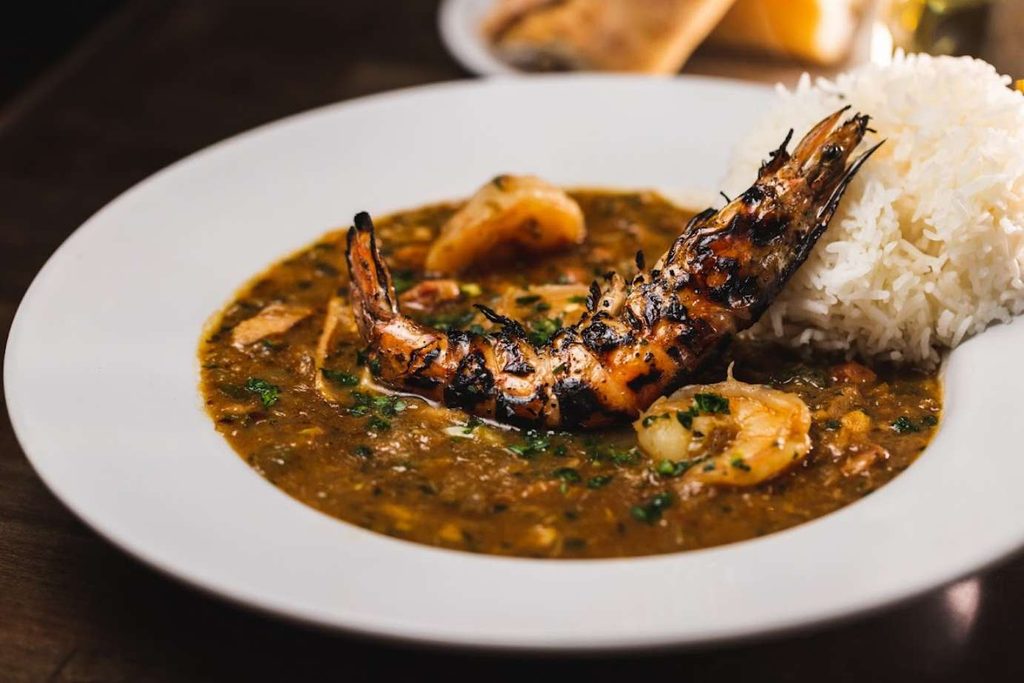
Either way, Louisiana cooks build flavor in stages: aromatics first, then the roux, then herbs and spices, then a finish. Our gumbo follows that order. It starts with a dark roux built on rendered pork and chicken, takes on the holy trinity, picks up spices and fresh herbs in the steam kettle, and is finished with a citrus-herb gremolata and a pinch of filé.
Filé Powder: The Seasoning We Named the Restaurant After
Filé (say “FEE-lay”) is dried, ground sassafras leaf, and it’s the reason our name is on the door.
Choctaw cooks were using sassafras leaves to season and thicken soups and stews long before gumbo had a name. That knowledge carried into Cajun and Creole kitchens, and every pinch of filé still carries it. Food traditions deserve to be understood alongside the people who built them, and filé is one of the clearest examples on the Louisiana table. I wrote more about that history for National Gumbo Day.
The name tells you how to use it. Filé comes from the French for forming threads, which is what the powder does if you boil it: it turns stringy. So it goes in at the end, off the heat, or right at the table. A pinch over a hot bowl adds an earthy, herbal note and thickens the broth just slightly.
At Filé, you can watch that happen. Our gumbo is built and finished at the steam kettle bar, filé included, so the seasoning is part of the show instead of something hidden in the pot.
The Aromatic Base: Holy Trinity, Garlic, Green Onion, and Parsley
Before any spice hits the pot, there’s the holy trinity: onion, celery, and bell pepper, cooked down with the roux. It isn’t a spice blend. It’s a foundation, and it’s why Louisiana food never tastes like seasoning sprinkled on at the end.
At Filé, the trinity shows up in everything from our signature gumbo to our Iconic Jazz Fest Crawfish Bread, made with Leidenheimer bread we bring up from New Orleans.
Garlic is the trinity’s constant companion. Green onion and parsley come in at the other end of the process. Chopped fresh and stirred in or scattered on top, they wake up a long-cooked dish with something bright and green.
Garlic is the trinity’s constant companion. Green onion and parsley come in at the other end of the process. Chopped fresh and stirred in or scattered on top, they wake up a long-cooked dish with something bright and green.
The Peppers: Cayenne, Black, White, and Paprika
- Cayenne is the pepper most people associate with Cajun food, and the easiest to overdo. A little changes the whole character of a dish. Too much drowns everything else out.
- Black pepper brings a sharp, woody bite.
- White pepper is the one people forget. It hits the back of the throat instead of the tongue, which is why many classic Louisiana cooks use black, white, and cayenne together so the heat lands in different places.
- Paprika brings color and warmth without much fire. Smoked paprika adds a campfire depth that’s especially good on blackened fish and grilled meat.
The lesson for home cooks: you don’t always need more heat. Sometimes you need more kinds of pepper. That’s the idea behind our Good Stuff Pepper Blend, which layers Aleppo pepper and crushed red pepper with black pepper, Hungarian paprika, and cayenne for a broader, fruitier kick.
Herbs and Background Notes: Thyme, Bay Leaf, Oregano, Celery Seed, and Cumin
People think pepper first. Herbs are what make Louisiana seasoning taste rounded instead of aggressive.
- Thyme is the workhorse herb of Louisiana cooking, earthy and a little floral.
- Bay leaf goes into nearly every pot that simmers: gumbo, red beans, étouffée, jambalaya. You won’t taste it on its own, but you’ll miss it when it’s gone.
- Oregano adds a savory edge that balances garlic and peppers.
- Celery seed is the trinity’s celery in concentrated form, reinforcing a flavor that’s already in the base.
- Cumin belongs in the background. A small amount adds warmth behind the peppers without taking over.
It’s why a well-built Cajun blend is a composition, not a list. Every spice has a job. Our gumbo follows the same rule: it’s deeply seasoned, then finished with a citrus-herb gremolata to brighten it.
At the Finish: Hot Sauce and Crab Boil
Two seasonings rarely make the spice lists, but they’re everywhere in Louisiana.
Hot sauce. Louisiana-style hot sauce is mostly peppers, vinegar, and salt, so it brings heat and acidity in the same dash. A few drops cut through a rich bowl and bring it back to life. Ours is Louisiana Hot Sauce.
Crab boil. This is the spice mix that seasons boiled crawfish, crab, and shrimp, typically built on cayenne, mustard seed, coriander, bay leaf, and allspice. Our Shrimp Étouffée uses a house crab-boil blend, which gives it a seafood-boil character you won’t get from a standard Cajun seasoning.
Spice Isn’t the Same as Heat
Spicy” doesn’t have to mean burning. A good gumbo should taste like a lot more than cayenne. You should taste the roux, the trinity, the herbs, and whatever’s in the bowl, whether that’s seafood, chicken, sausage, or vegetables. Pepper gives it structure. It shouldn’t take over.
That’s why every gumbo at Filé comes at the heat you choose: Mild, Medium, Hot, or Extra Hot. Even Extra Hot is built for flavor first.
How These Spices Show Up on Our Menu
The easiest way to understand Louisiana seasoning is to taste it in context.
- Cornmeal-Encrusted Fried Seafood: dredged in cornmeal and Cajun spices, fried crisp, served with rémoulade. Butterfly Shrimp: baked with garlic butter and Cajun seasoning.
- Andouille & Shrimp Jambalaya: smoked tasso, andouille, a dark brown roux, tomato paste, porter beer, shrimp, and aromatic rice.
- Shrimp Étouffée: our house crab-boil blend with butter, shrimp, the holy trinity, and a medium-dark roux.
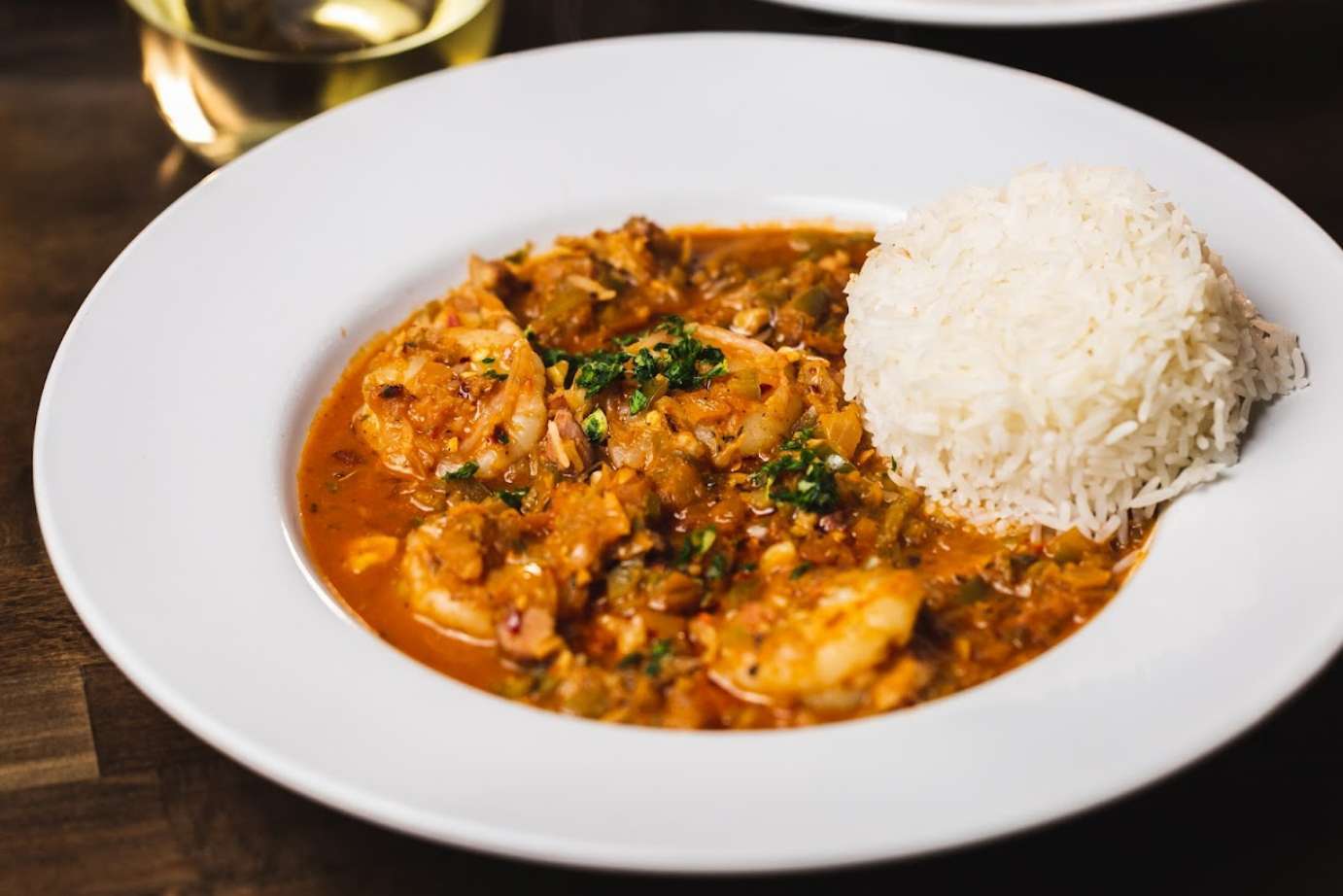
- Spicy Shrimp Creole: fresh tomatoes, shrimp, bacon, and the trinity, finished with chili oil and toasted garlic.
The Shrimp Creole is a good example of Creole cooking’s love of tomatoes, though Louisiana is too diverse for hard rules. The same garlic, pepper, and herbs taste completely different supporting a dark roux, a tomato stew, or a crisp cornmeal crust. See the full menu.
Bring the Flavors Home: Our Two Spice Blends
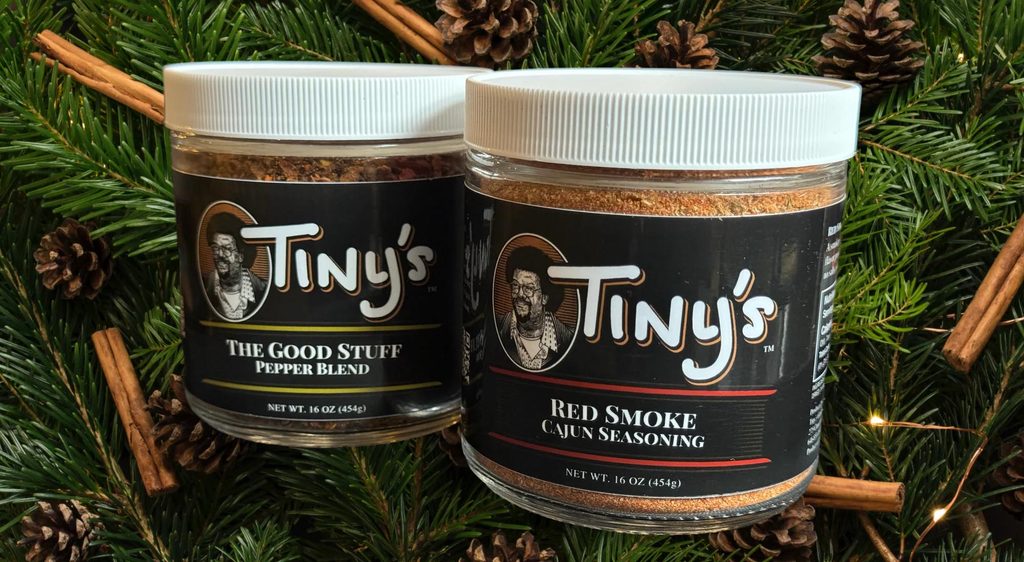
Tiny’s Red Smoke Cajun Seasoning
This blend is named for my grandfather, Aubrey “Tiny” Gaines. His cooking inspired the way we cook at Filé, and the restaurant almost opened as Tiny’s Gumbo Bar in his honor. Red Smoke carries his name. It’s built from our restaurant’s original recipe.
It combines smoked paprika, granulated onion and garlic, black pepper, thyme, celery seed, cayenne, cumin, and oregano. Use it on blackened fish, gumbo, and jambalaya, or anything fried, grilled, baked, or stewed.
It’s also salt-free, and that matters. Salt and seasoning aren’t the same thing. With no salt in the blend, you season for flavor and salt to taste, separately. Shop Tiny’s Red Smoke Cajun Seasoning
The Good Stuff Pepper Blend
This is our answer to plain black pepper. Aleppo pepper, crushed red pepper, black pepper, Hungarian paprika, and cayenne give you depth and a kick anywhere you’d normally grab the pepper mill: grilled or baked chicken, ribs, even pizza. Shop The Good Stuff Pepper Blend.
Frequently Asked Questions
What spices are in Cajun seasoning?
Most Cajun blends start with paprika, cayenne, black pepper, garlic, and onion, then add herbs like thyme and oregano. Many also include white pepper or celery seed. Plenty include salt; ours doesn’t.
What’s the difference between Cajun and Creole seasoning?
They share most of their spices. Cajun blends tend to lean bolder and more pepper-forward. Creole blends often lean harder on herbs and are used in more tomato-based dishes.
Is Cajun food always spicy?
No. Good Cajun food is deeply seasoned, not necessarily hot. Heat should support the flavor, not cover it. At Filé you can order any of our gumbos Mild, Medium, Hot, or Extra Hot.
What is filé powder?
Filé is dried, ground sassafras leaf, a seasoning and thickener first used by Choctaw cooks. It adds an earthy, herbal note to gumbo.
When should you add filé to gumbo?
At the end, off the heat, or at the table. Boiling filé makes it stringy, so sprinkle it over the bowl just before eating.
Taste It in Tribeca
Reading about Louisiana seasoning only gets you so far. Filé Gumbo Bar is at 275 Church Street, near White and Franklin, bringing slow-cooked gumbo and Cajun and Creole classics to Lower Manhattan.
- Address: 275 Church Street, New York, NY 10013
- Reservations: strongly recommended for Friday and Saturday dinner and weekend brunch. Call (646) 851-0810 or book on OpenTable.
- Order online or browse the menu before you come.
- Groups: for birthdays, corporate dinners, and celebrations, we offer dedicated group reservations.
First time? Start with a lil’ bowl of gumbo. Taste the roux. Notice the herbs. Find the pepper. And ask about the filé. In Louisiana cooking, the smallest pinch can carry a very big story.